
Arrest Warrants in Taylor County
An arrest warrant in Taylor County is a judge's or magistrate's order telling a peace officer to take someone into custody. Before signing, the judge reviews a complaint or sworn affidavit to see if probable cause exists. If the standard is met, the warrant issues. What it does not do is settle the charge itself; only a trial can do that.
Felony cases in Taylor County run through the 42nd, 104th, or 350th District Court after charging or indictment. Justice of the peace courts and municipal judges also hold magistrate authority for lower-level matters. So read the file first. The court named there is where you ask about the warrant, the bond, and any required appearance.
Three Taylor County Felony Courts
Taylor County runs three criminal district courts: the 42nd, the 104th, and the 350th. The county's Felony Division handles roughly 2,000 felony cases a year. That figure is a caseload, not a count of outstanding warrants. For a Taylor County warrant question tied to a felony, the District Clerk holds the district-court filings and can point you to the right docket, though the issuing judge controls the warrant itself. The Felony Division overview walks through the court and grand-jury workflow. Family or JP matters may sit elsewhere, such as the County Courts at Law or a local lower court.
What a Taylor County Arrest Warrant Contains
No complete sample arrest-warrant record is published, so treat generic search results with care. Field categories from public sources are broad only. Never infer bond terms or status from them. Ask the Taylor County clerk to tie the warrant to the correct cause number before relying on anything.
| Warrant Number | No public format found Ask the clerk for the case identifier. |
|---|---|
| Named Subject | Confirm the record with the issuing court; no public sample row was inspected. |
| Charge / Offense | May identify an offense and classification; ask the clerk when public detail is limited. |
| Issuing Judge / Court | District Court, County Court at Law, JP, municipal judge, or another magistrate. |
| Bond / Bail Set | No universal Taylor County bond schedule was located; verify case terms with the court. |
| Date Issued | Ask whether the public file shows an issue date and whether the process remains active. |
Taylor County Affidavits and Sealed Files
Arrest-under-warrant procedure in Texas comes from the Code of Criminal Procedure, Chapter 15. A sealed indictment or warrant can stay out of public case search until it is unsealed or executed. Chapter 18 covers search-warrant affidavits, a different record that usually opens up after execution unless a statutory exception applies. The Chapter 15 text and the Chapter 18 text lay out each process. A blank portal result does not prove that no sealed or new order exists in Taylor County.
How Taylor County Arrest Warrants Are Served
Peace officers assigned to the job execute the order. Taylor County lists the Sheriff's Office, four constable offices, Abilene Police and City Marshals, and other city police among the agencies that may serve process. Which one gets the warrant depends on the court. No public countywide service schedule exists. After an arrest, the person is typically booked and brought before a magistrate. Article 15.17 requires prompt magistration, generally within 48 hours in the situations the statute covers. Bond or release settles custody only. It does not resolve the underlying charge or end the case. The Texas court structure page explains how district, justice, and municipal courts divide the work.

Courts issue process; sheriff, constable, and city officers carry out service as assigned.
Taylor County Booking and Jail Records
Custody and booking questions go to the Adult Detention Center at 910 South 27th Street in Abilene. Taylor County publishes no walk-in warrant-confirmation procedure or bond-window hours there. The sheriff's FAQ directs anyone wanting a county warrant check to 450 Pecan instead, so the jail address is not the warrant desk. Call first. Odyssey splits jail records and jail-bond records into separate categories. Those entries can explain custody or release, but the issuing court still holds the current warrant status.
Before going to the jail about a surrender or bond, call the court or your lawyer. Taylor County posts no window schedule.
Taylor County Jail Search and Warrant Status Differ
The county's public-access portal also links a jail-record search. That can help you find a custody entry. It is not an all-warrants index, though. An arrest entry means service happened; the case, and any remaining warrant or bond obligations, still belongs to the court. Open the official jail-search route for its limited record family. If the person is not listed, ask the Taylor County sheriff or the issuing court rather than reading absence as clearance.
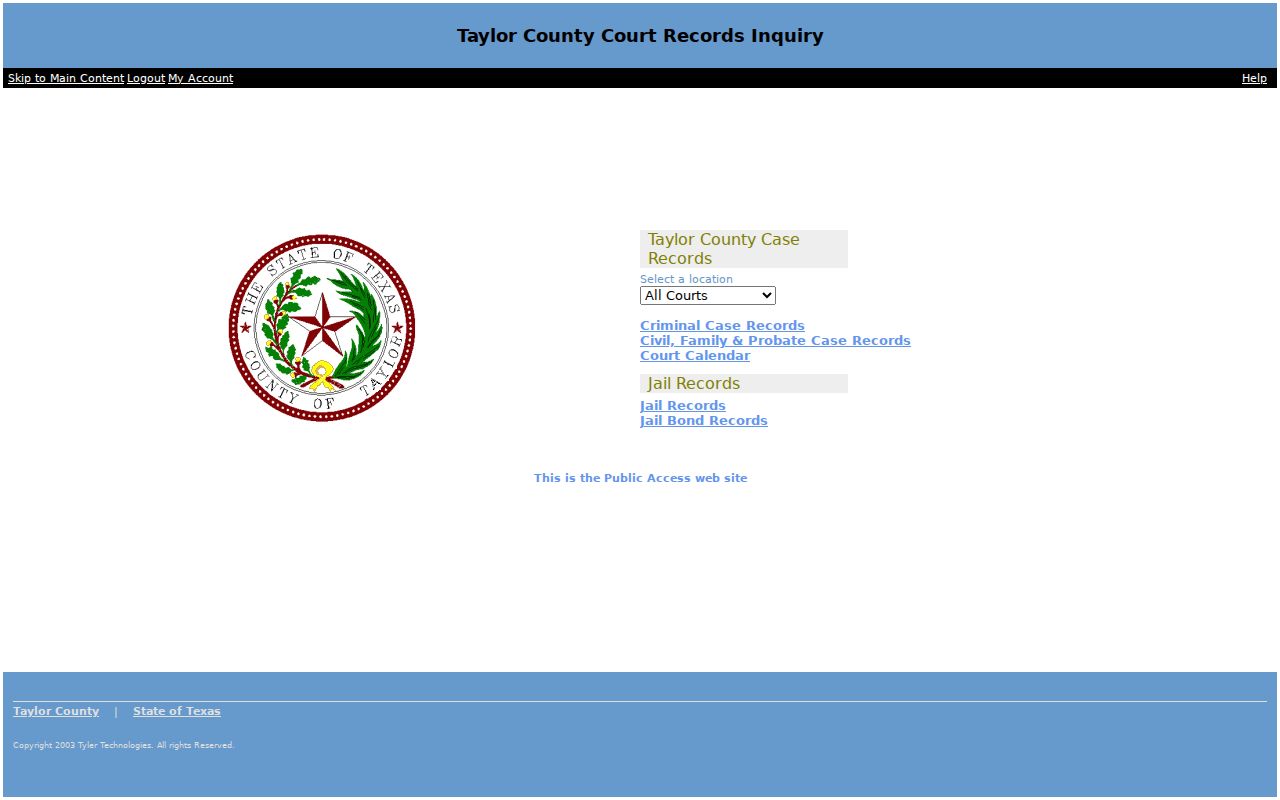
Verify an active warrant through the Taylor County court file or sheriff confirmation; the jail lookup is a separate search.
Taylor County Arrest Warrant vs Summons vs Bench Warrant
Three papers, three jobs. A summons tells a person to show up in court without any arrest. An arrest warrant lets Taylor County officers take someone into custody once the required review is done. A bench warrant, by contrast, answers a missed court date or other skipped duty, and the right move depends on which paper the issuing court sent; Taylor County's bench warrant page walks through the missed-setting process.
| Feature | Arrest Warrant | Summons | Bench Warrant |
|---|---|---|---|
| What It Orders | Take a person into custody. | Appear at a stated court time. | Arrest or bring a person before court after a missed duty. |
| Basis | Probable cause in a criminal process. | Notice or charging procedure. | Failure to appear or comply. |
| Who Issues It | Judge or magistrate with authority. | Court or authorized officer. | Judge handling the existing case. |
| How to Respond | Ask counsel and the court about appearance or bond. | Attend on the stated date. | Contact the issuing court about reset or recall. |
District Clerk and County Clerk Hold Different Cases
Taylor County splits its clerks by case type. The District Clerk holds district filings and felony records, while the County Clerk keeps Class A and B misdemeanor files for the two County Courts at Law. A district-court warrant question belongs with the district office. Neither clerk decides whether an arrest warrant gets recalled, since that ruling comes from the court itself. For a county-court misdemeanor, surnames starting A-K fall to Court at Law #1. Names L-Z go to Court at Law #2. A JP or municipal case follows the court named on the citation. Ask the right office to identify the docket before arranging any appearance.
What to Do If There Is a Warrant for You
Do not trust a third-party notice or a blank search result. An attorney can call the issuing court, arrange a voluntary walk-through, post bond, or move to recall or quash the warrant. Only Abilene Municipal Court promises no arrest at a voluntary appearance. In Taylor County, that promise covers its own city matters alone.
Important: Contact a Texas criminal-defense attorney about the issuing court’s process before arranging surrender, bond, or a walk-through appearance.
Federal Warrants Use a Separate Abilene Court
Taylor County sits in the Northern District of Texas, Abilene Division. Federal arrest warrants live there, not in Taylor County Sheriff or Odyssey records. PACER and CourtListener can surface federal docket material. Neither is a conclusive warrant-status system. Sealed matters may not appear at all. For a federal, state, or outside-county warrant, ask the issuing jurisdiction or a lawyer. No Taylor County clerk can recall an order from another court.